
Introduction
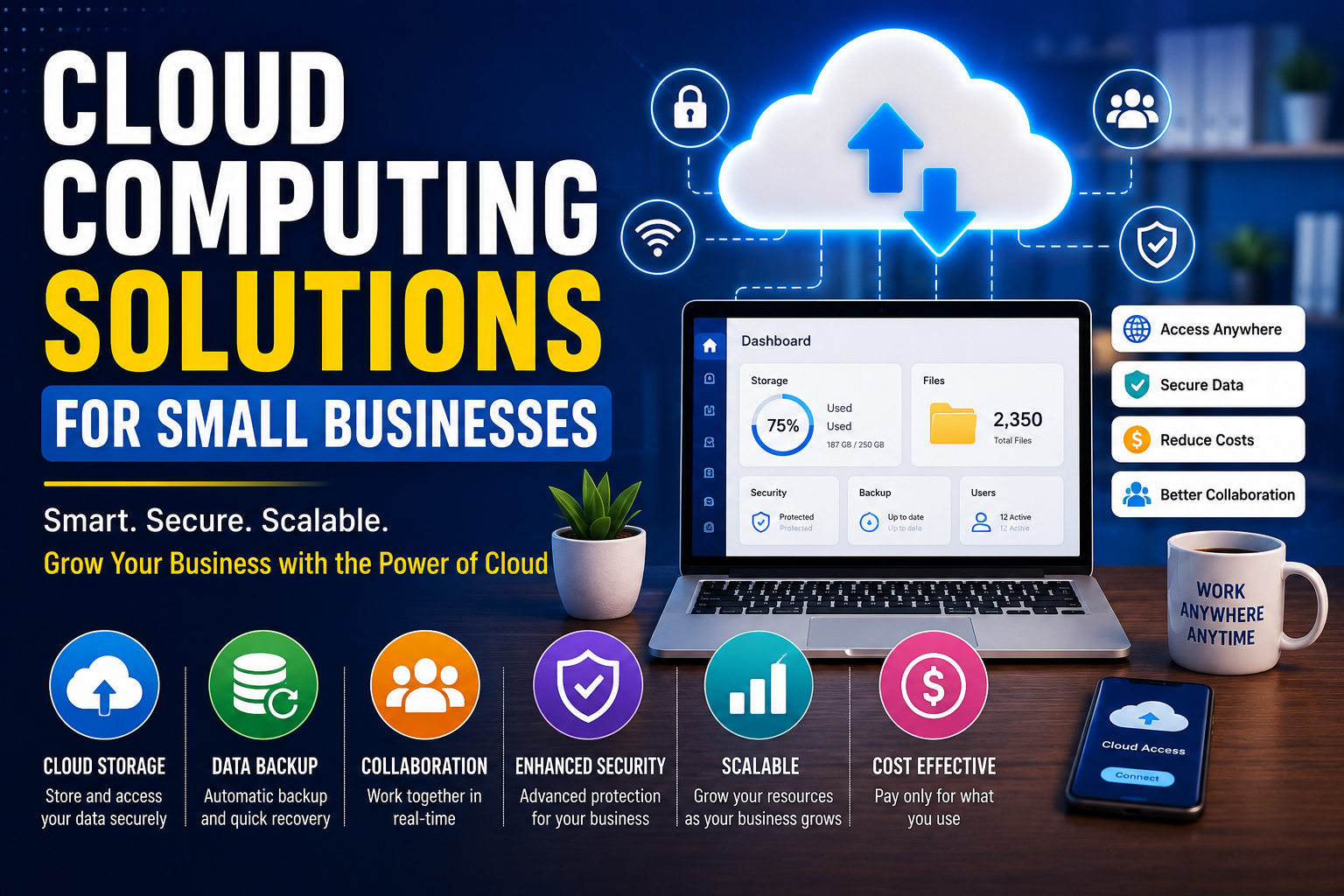
Cloud computing has become one of the most valuable technologies for small businesses. In 2026, companies are moving away from expensive on-site servers and adopting cloud-based solutions to improve efficiency, reduce costs, and support business growth. Whether you own a startup, retail store, eCommerce business, or service company, cloud computing offers flexible, secure, and scalable solutions that help your business stay competitive.
With cloud technology, businesses can access files, applications, and data from anywhere with an internet connection. This enables employees to work remotely, collaborate in real time, and improve productivity while reducing hardware and maintenance costs.
In this guide, we will explore the best cloud computing solutions for small businesses, their benefits, key features, and tips for choosing the right cloud platform.
What Is Cloud Computing?
Cloud computing is the delivery of computing services such as storage, software, databases, networking, and servers over the internet instead of using local hardware.
Rather than purchasing expensive physical infrastructure, businesses pay for cloud services based on their needs. This makes cloud computing an affordable option for small businesses with limited budgets.
Why Small Businesses Need Cloud Computing
Modern businesses rely on fast, secure, and reliable technology. Cloud computing helps organizations streamline operations while improving security and collaboration.
Benefits of Cloud Computing
- Lower IT costs
- Secure online data storage
- Access from anywhere
- Better team collaboration
- Automatic software updates
- Reliable data backup
- Easy scalability
- Increased business productivity
Cloud computing allows businesses to focus on growth instead of maintaining expensive IT infrastructure.
1. Cloud Storage Solutions
Cloud storage enables businesses to securely store files online and access them from any device.
Key Benefits
- Secure file storage
- Automatic synchronization
- Easy file sharing
- Remote access
- Data protection
- Reduced hardware costs
Cloud storage also minimizes the risk of losing important business documents due to hardware failure.
2. Cloud Backup and Disaster Recovery
Every business should have a backup strategy to protect important information.
Cloud backup automatically saves business data and allows quick recovery if files are deleted, damaged, or affected by cyberattacks.
Advantages
- Automatic backups
- Fast recovery
- Reduced downtime
- Business continuity
- Secure data protection
A reliable backup solution ensures your business can recover quickly from unexpected events.
3. Cloud Collaboration Tools
Collaboration is easier with cloud-based productivity platforms.
Employees can work on the same documents, communicate instantly, and manage projects regardless of their location.
Features
- Shared documents
- Real-time editing
- Video meetings
- Team messaging
- File sharing
- Task management
These tools improve communication and increase workplace efficiency.
4. Cloud-Based Business Applications
Many business applications now operate entirely in the cloud.
Popular cloud software includes:
- Accounting systems
- CRM software
- HR management
- Inventory management
- Project management
- Email services
Cloud applications reduce installation requirements while improving accessibility.
5. Cloud Security Solutions
Security is one of the biggest priorities for businesses using cloud services.
Modern cloud providers offer advanced protection through:
- Data encryption
- Multi-factor authentication
- Firewall protection
- Identity management
- Threat detection
- Automatic security updates
These features help businesses protect sensitive customer and company information.
6. Scalable Cloud Infrastructure
As businesses grow, their technology requirements also increase.
Cloud computing allows businesses to easily increase storage, computing power, and services without replacing expensive hardware.
Benefits
- Flexible resources
- Pay-as-you-grow pricing
- Better performance
- Reduced infrastructure costs
This scalability makes cloud computing ideal for startups and growing businesses.
7. Cloud Hosting for Business Websites
Cloud hosting provides faster, more reliable website performance than traditional hosting.
Benefits
- Faster loading speeds
- Better uptime
- Improved website security
- Automatic scaling
- Reliable performance
Businesses with cloud-hosted websites often experience better customer satisfaction and improved search engine rankings.
How to Choose the Right Cloud Computing Solution
Selecting the best cloud platform depends on your business needs.
Consider These Factors
Security
Choose a provider with strong encryption, backup systems, and compliance standards.
Cost
Compare pricing plans and select a solution that fits your budget while allowing future growth.
Reliability
Look for providers with excellent uptime and customer support.
Scalability
Ensure the platform can expand as your business grows.
Ease of Use
A user-friendly platform saves time and reduces employee training.
Advantages of Cloud Computing for Small Businesses
Cloud technology provides numerous long-term benefits.
Cost Savings
Businesses avoid large investments in servers and IT infrastructure.
Increased Productivity
Employees can work from anywhere using cloud-based applications.
Better Collaboration
Teams can edit documents, communicate, and manage projects in real time.
Improved Security
Leading cloud providers invest heavily in cybersecurity and data protection.
Business Flexibility
Cloud services make it easier to expand operations without major technology upgrades.
Common Challenges of Cloud Computing
Although cloud computing offers many advantages, businesses should also consider potential challenges.
- Internet dependency
- Subscription costs
- Data privacy concerns
- Choosing the right provider
- Employee training
Most of these challenges can be managed by selecting a trusted cloud service provider and implementing proper security measures.
Frequently Asked Questions
What is cloud computing?
Cloud computing is the delivery of IT services such as storage, software, networking, and servers through the internet instead of local hardware.
Why is cloud computing important for small businesses?
It reduces costs, improves productivity, enhances security, and enables remote work and collaboration.
Is cloud computing secure?
Yes. Trusted cloud providers use advanced encryption, security monitoring, and regular backups to protect business data.
Can small businesses afford cloud computing?
Yes. Most cloud platforms offer flexible pricing plans, allowing businesses to pay only for the resources they use.
Conclusion
Cloud computing has become an essential technology for small businesses in 2026. It provides secure data storage, reliable backups, better collaboration, and scalable infrastructure while reducing operational costs.
Whether you need cloud storage, business applications, cloud hosting, or cybersecurity solutions, adopting cloud technology can help your business become more efficient and competitive. By choosing the right cloud computing solution, small businesses can improve productivity, protect valuable data, and prepare for future growth in an increasingly digital world.